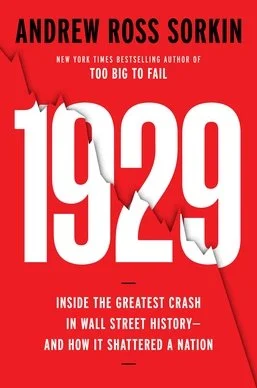
1929
Rating: 4/5
I don't usually read history books. But 1929 by Andrew Ross Sorkin doesn't read like a history book. It reads like a thriller that happens to be true.
Sorkin (the same guy who wrote Too Big to Fail about the 2008 crisis) takes you inside the Wall Street crash of 1929. The ticker tapes, the panicked traders, the people who saw it coming and got ignored. He dug through historical records, diaries, weather reports, even architectural details to rebuild what those days actually felt like. And it works. You forget you're reading about something that happened almost a hundred years ago.
What pulled me in was how human the whole thing is. These weren't just faceless bankers. They were people caught up in a moment where everyone believed the good times would never end. The speculation, the greed, the blind optimism. Nobody thought they were being reckless at the time. They all thought they were being smart.
That's the part that stayed with me. The psychology of it. How easy it is for smart people to convince themselves that this time is different. That the old rules don't apply anymore because everything has changed. You hear that exact same language today around AI, crypto, tech valuations. The specifics change but the pattern doesn't.
I'm giving it a 4 instead of a 5 because there were stretches in the middle where the pacing slowed down and I found myself skimming through some of the political back-and-forth between Wall Street and Washington. But the first hundred pages and the final section are some of the best non-fiction writing I've read recently.
If you're interested in markets, psychology, or just want to understand why humans keep making the same mistakes with money, pick this one up.